Retro Bowl
- 4.6
- Rating
- 5.00M
- Installs
- Free
- Price

 Analysis by App-foxy
I went into Retro Bowl expecting a quick football distraction, but I ended up treating it more like a compact team-management game with arcade matches attached. That distinction is important. The appeal is not realistic simulation or a huge control scheme; it is the satisfying loop of making a few smart decisions, playing a short game, and watching a modest franchise become your own. In my experience, that makes it unusually easy to pick up while still giving me a reason to return.
New Star Games Ltd has built this sports game around a deliberately old-school presentation. It feels inspired by the era when a football game could communicate an entire match with simple graphics, clear menus, and a handful of meaningful choices. The result is free to start, rated for Everyone, and available for devices running Android 5.0 or later. It has also found a substantial audience, with an average rating of 4.6 from around 508 thousand ratings and more than 5 million installs.
Why the simple formula works so well
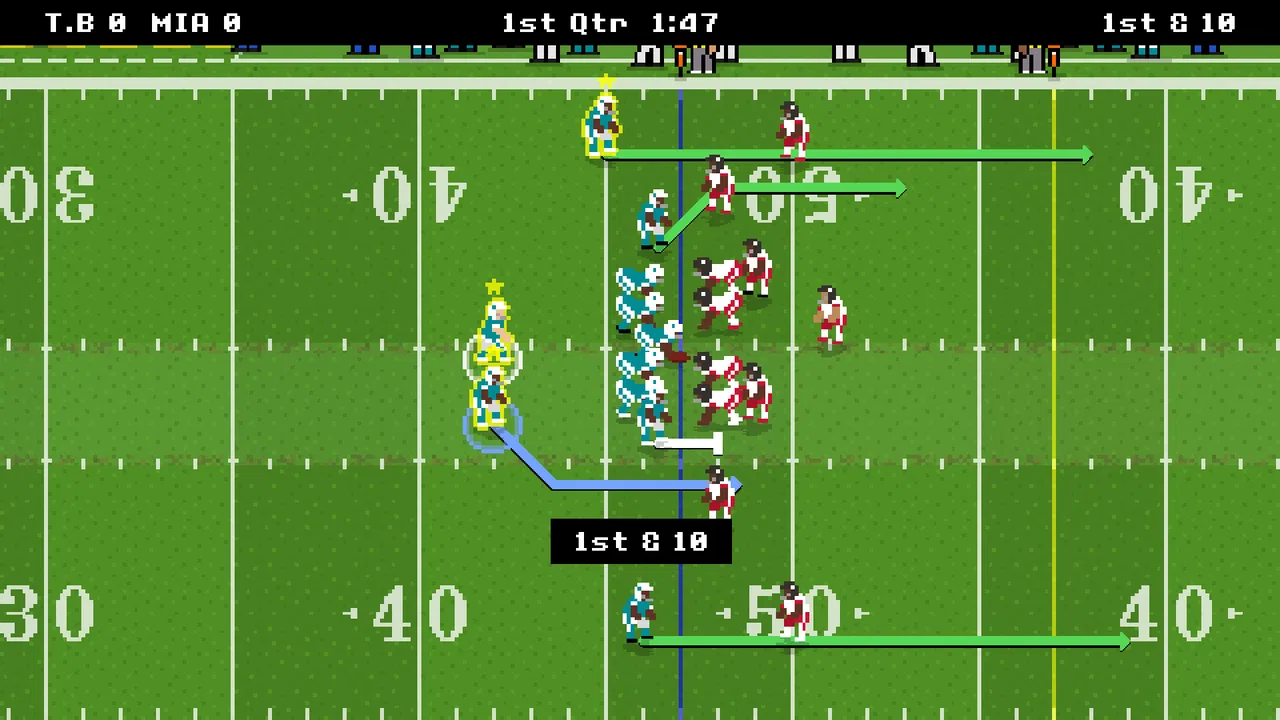
The first thing I noticed is how quickly a match becomes readable. I do not have to learn a long list of gestures before I can make a useful play. The action centers on timing, direction, and judging what is developing in front of me. That gives each offensive possession a pleasant rhythm: I scan the situation, choose the safer option or take a chance, then live with the result.
You May Also Like

 Google Keep - Notes and lists
Google Keep’s Quiet Growth Shows the Appeal of Simpler Notes
As mobile work gets busier, Google Keep keeps winning a simple contest: capture a thought quickly, find it later, and get on with the day.

 Blood Strike: 2.5 Anniversary
Blood Strike’s Loadouts Turn Every Drop Into a Tactical Gamble
A close look at Blood Strike’s custom loadouts: how fast access to signature weapons reshapes its battle royale rhythm, rewards preparation, and narrows the gap between fights.

 Pandora - Music & Podcasts
Pandora’s Music Is Easy to Start, but Harder to Recover
Pandora’s strength is its low-effort path from a seed to a station. Its weak spot is how much confidence it asks you to place in connection, setup, and quiet recovery.

 8 Ball Pool
 Is Built on Rivalries, Rematches, and Routine
A close look at the rivalries, rematches, shared routines, and unanswered safety questions that turn a quick pool match into a persistent mobile community.

 Samsung Music
’s Quiet Strength Is Playing What You Already Own
Its reach comes less from spectacle than from dependable access to a personal library. That simplicity is both the app’s strongest retention engine and its ceiling.

 AccuWeather: Weather Radar
AccuWeather Review: A Quick, Clear Forecast for Everyday Decisions
For everyday plans, the best forecast is the one you can understand quickly. AccuWeather makes rain timing, radar, and local conditions easy to act on, with a few trade-offs.
More From Our News Desk



That simplicity is not the same as shallowness. A short pass can keep a drive alive, while a more ambitious throw may create a big gain or turn into a costly mistake. The controls leave room for judgment without asking me to memorize complicated combinations. I found myself thinking less about button execution and more about whether the situation justified risk.
The retro visual style supports this design instead of merely decorating it. Players are small and expressive rather than detailed, the field is easy to read, and the action does not become visually noisy. I can understand what happened immediately, which matters on a phone where an overloaded interface would make every possession tiring. It also gives the game a personality that many modern sports titles lose beneath realism and presentation.
The franchise side is where the experience becomes more personal. I am not simply replaying isolated matches; I am making choices about the direction of a team. The enjoyable tension comes from balancing immediate performance with longer-term improvement. A decision that helps the next game may not be the decision that builds the strongest roster over time, so progress feels connected to judgment rather than just repetition.
One useful habit is to treat every possession as part of the wider season rather than chasing spectacular plays. When I started forcing ambitious throws because they looked exciting, the team became less reliable. Playing with a little patience made the management layer more rewarding, because the results felt like consequences of my approach instead of random outcomes.
Short sessions that still feel complete
This is one of the better mobile sports games for filling small gaps in the day. I can play a little during a commute, between errands, or while waiting for an appointment without feeling that I have abandoned a complicated simulation halfway through. A match has enough structure to feel meaningful, but it does not demand the kind of uninterrupted attention associated with a console sports title.
That convenience also changes how I use the franchise mode. I do not need to reserve a whole evening to make progress. I can play one game, make a couple of decisions, and stop. When I return, I still remember what I was trying to improve. That continuity is a real strength for mobile gaming, especially for people who prefer a series of focused sessions over one long campaign.
There is a practical trade-off, though. The compact format means the game does not provide the same breadth as a full simulation. Anyone looking for detailed playbooks, realistic presentation, or extensive control over every phase of football may find the experience intentionally limited. I see that as a design choice rather than a flaw, but it still determines who will enjoy it.
The management layer adds stakes without burying the action
The franchise structure gives my wins and losses more weight than they would have in a basic arcade game. A strong performance feels useful because it contributes to a larger project, while a poor stretch encourages me to rethink how I approach the team. The menus are not trying to turn me into a professional general manager; they provide enough responsibility to make the season feel like mine.
I especially like the way this creates different kinds of play. One person can focus on winning immediately, while another can enjoy building a team gradually and accepting a few rough results along the way. The game accommodates both attitudes better than a fixed challenge ladder would. I can play aggressively when I want excitement or conservatively when I am trying to protect progress.
A less obvious strength is that the management decisions make the arcade controls more interesting. Without that larger context, I might judge a risky play only by whether it succeeds. With a franchise at stake, I think about field position, momentum, and the cost of giving away an opportunity. The game does not need a complicated tactical interface to make decisions feel consequential.
For a newcomer, I would recommend learning the match rhythm before worrying about perfect franchise decisions. Early on, it is tempting to treat every screen as equally important. I found better results by first becoming comfortable with the basic flow of a drive, then using the management options to support the style of play that felt natural. That approach reduces the initial learning curve without removing the strategic side.
Where the retro approach starts to show its limits
The same restraint that makes the game approachable can eventually leave experienced players wanting more variety. Once I understood the core rhythm, some matches began to feel familiar in a way that a larger simulation might avoid through deeper systems and more elaborate presentation. The franchise mode gives the action context, but it cannot completely disguise the fact that the on-field formula stays focused.
This is also not the right choice for someone who wants a licensed, broadcast-style football experience. The charm comes from abstraction, not authenticity. If your ideal sports game includes lifelike athletes, extensive commentary, detailed stadium atmosphere, and granular control over every play, a conventional console-style alternative will probably suit you better. I would not recommend choosing this game while expecting it to imitate that category.
The free entry point is welcome, but the presence of optional in-app purchases means some players will want to keep an eye on spending. Individual purchases range from $0.99 to $29.99. I would approach those options carefully and decide in advance whether I want the free experience to stand on its own, particularly if the game is being played by a younger user despite its Everyone rating.
Another limitation is that the retro presentation may not appeal to everyone. I enjoy the clarity and personality, but players who judge sports games primarily by visual detail may find it too minimal. The small-scale graphics are functional and memorable, yet they do not try to create the spectacle of a televised match. That is worth understanding before downloading it.
How I would use it in everyday play
Imagine having ten minutes before a train arrives. A large football simulator may be a poor fit because loading, setup, and the length of a match can turn a short break into an awkward interruption. Here, I can open the game, play a focused stretch, and make a useful step in my franchise. If the train arrives at an inconvenient moment, the session has still felt worthwhile rather than unfinished.
For a longer evening, I would use a different approach. I might play several games and pay closer attention to how my choices affect the direction of the team. The game works in both situations, but the mood changes: short sessions emphasize quick decisions, while longer sessions reveal the satisfaction of developing a consistent strategy.
It is also a good option for someone who normally avoids sports management because menus feel intimidating. The football remains the center of attention, and the franchise decisions add depth gradually. I can enjoy the action first and become more interested in the team-building side later. That makes the game a useful bridge between a pure arcade title and a more demanding sports simulation.
On the other hand, I would skip it if my main goal were multiplayer competition, highly realistic football mechanics, or exhaustive customization. Its best qualities are focused single-player progression, quick arcade action, and a strong retro identity. Asking it to replace a full-featured sports simulation would be unfair to the game and frustrating for the player.
What the current release means for new players
The current version is 1.6.41, so a new player is joining an established mobile release rather than a rough first attempt. I appreciate that context because the game feels shaped around a clear identity instead of trying to include every possible sports feature. Its age rating of Everyone also makes it approachable for a broad audience, although adults should still decide whether optional purchases fit their household rules.
Since it is free, the sensible way to approach it is simply to play without assuming that a purchase is necessary for enjoyment. Spend time learning the passing rhythm, notice which decisions make your drives more dependable, and see whether the franchise loop holds your attention. If the compact style clicks, the game offers plenty of room for a personal routine; if it does not, you will discover that quickly without paying an entry fee.
I would also suggest resisting the urge to judge the game after only a few possessions. The first attraction is the visual style, but the stronger hook is the relationship between small decisions and longer-term progress. Give yourself enough time to understand that relationship. The game becomes more satisfying once a win feels like evidence that your approach is improving, not merely a lucky result.
My recommendation for different kinds of players
I recommend this sports game most strongly to people who want football that is easy to control but not completely mindless. It suits players who enjoy making a few consequential choices, building a team over time, and returning for short sessions. It is particularly appealing if you like retro design and prefer clear systems over a crowded interface.
I am more cautious about recommending it to dedicated simulation fans. You may admire the clean design but still miss the depth, realism, and presentation found in larger alternatives. The same applies to players who need constant novelty from match to match. The franchise mode provides motivation, but the appeal depends on enjoying the core action repeatedly.
For families, the Everyone rating makes it an approachable choice in terms of intended audience. I would still explain the optional purchase range, from $0.99 to $29.99 per item, before handing it to a child. That is not a criticism of the football itself; it is simply a sensible part of deciding whether a free-to-start game fits your household.
After spending time with it, my view is clear: Retro Bowl is at its best when you want meaningful football decisions without the weight of a full simulation. New Star Games Ltd has found a strong middle ground between quick arcade play and franchise management. The game is charming, readable, and surprisingly easy to make your own.
Its weaknesses are real. The limited presentation will not satisfy players chasing realism, the repeated on-field structure can become familiar, and optional purchases deserve attention. Still, those issues do not undermine the central idea. For me, the combination of short matches, retro personality, and gradual team-building creates a more lasting experience than the simple visuals suggest.
If you want a football game that fits naturally into spare moments and rewards thoughtful choices, I think it is worth trying. If you want a digital recreation of a televised league with every detail under your control, choose a more traditional simulation instead. My final verdict is positive: this is a focused, friendly, and genuinely replayable sports game whose limitations are closely tied to the simplicity that makes it enjoyable.
FAQs for Retro Bowl
01What is Retro Bowl, and what type of game is it?
Retro Bowl is a football simulation game with a nostalgic nod to the classic arcade style of the 80s and 90s. It combines simple, yet engaging gameplay with team management elements. Players take on the role of a coach, managing teams, strategies, and player rosters while also experiencing the thrill of on-field action.
02Is Retro Bowl free to play, or does it have in-app purchases?
Retro Bowl is free to download and play, but it includes in-app purchases. While the core gameplay is accessible without spending money, certain features, like team customization and additional team slots, may require purchases. This allows players to enhance their experience if they choose, but it is not necessary to enjoy the game.
03Which platforms support Retro Bowl?
Retro Bowl is available on both Android and iOS platforms, making it accessible to a wide range of mobile users. The game is optimized for mobile devices, offering a smooth and enjoyable experience on smartphones and tablets. It can be downloaded from the Google Play Store or the Apple App Store.
04How does Retro Bowl manage team customization and strategy?
In Retro Bowl, players assume the role of a team coach, managing various aspects of the team. This includes recruiting and upgrading players, developing strategies, and making real-time tactical decisions during games. The game's depth in management allows players to focus on building a winning team, adding a layer of strategic planning to the arcade gameplay.
05What are the main features that set Retro Bowl apart from other sports games?
Retro Bowl stands out with its retro graphics, simple controls, and engaging team management system. Unlike many sports games that focus solely on gameplay, Retro Bowl combines on-field action with off-field decisions. Its nostalgic aesthetic and strategic elements provide a unique experience that appeals to both casual gamers and football enthusiasts.
Pros
- Simple controls make gameplay easy to learn.
- Engaging retro graphics enhance nostalgia.
- Offers strategic team management features.
- Addictive gameplay with quick matches.
- Free to play with optional in-app purchases.
Cons
- Limited team customization options.
- Some ads can disrupt the experience.
- No multiplayer mode available.
- In-game purchases can be pricey.
- Occasional bugs affect gameplay.

Retro Bowl
Gallery